February 6, 2026
Dry Van Trailer Specifications Explained Simply
WANT THE FULL SHEET?
View detailed specifications before you compare trailers.
When you're investing in equipment for your business, you don't have time to sift through complicated charts or unclear details. You need straightforward answers. That's why understanding dry van trailer specifications matters. The right information helps you protect your bottom line, maximize payload, and make a confident purchase.
At Sun State Trailers, we work with owner-operators and fleet managers across Florida who want dependable equipment without unnecessary hassle. Whether you're expanding your fleet or replacing an aging unit, we can break down the key dry van trailer specifications in plain language.
Why Dry Van Trailer Specifications Matter
A dry van trailer is one of the most versatile and widely used trailer types in the trucking industry. A significant portion of freight rides in dry vans because they protect cargo from weather and theft while offering flexible capacity. But not all dry vans are built the same.
The wrong trailer size or weight rating can:
- Reduce your legal payload
- Increase maintenance costs
- Limit the types of freight you can haul
- Cut into your trailer ROI
Understanding specifications before you buy ensures you get equipment that works for your routes, customers, and long-term business goals.
Standard 53ft Dry Van Dimensions
The most common configuration today is the 53ft dry van. Here's what you can typically expect:
- 53 feet
- 102 inches (8.5 feet)
- About 100 inches
- Around 110 inches
- Approximately 13.5 feet
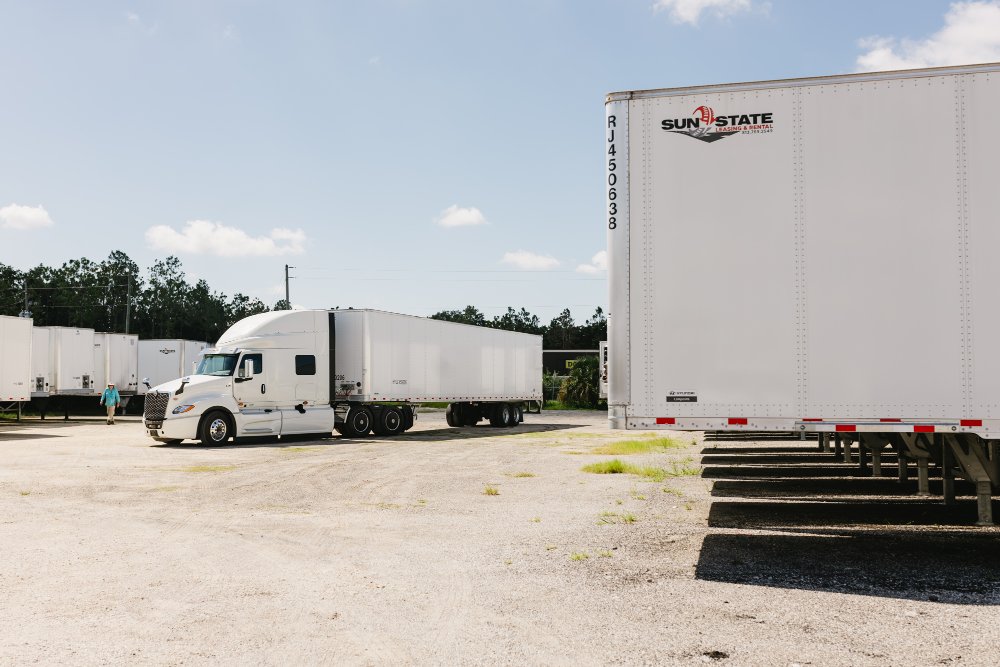
These 53ft dry van dimensions allow you to haul up to 26 standard pallets, depending on loading configuration. For many Florida-based carriers, this size offers the best balance between capacity and efficiency. It maximizes freight volume while staying compliant with federal and state regulations.
Key Specifications to Know
Gross Vehicle Weight Rating (GVWR)
Most standard dry van trailers have a GVWR of 65,000 to 68,000 pounds. This determines how much total weight the trailer can legally carry, including its own weight. If you consistently haul heavier freight, this number directly impacts your profitability.
Trailer Weight
The trailer weight is the empty weight of the trailer. Lighter trailers mean more payload capacity. Modern composite panel designs and high-strength steel components help reduce trailer weight without sacrificing durability.
Floor Type
Most dry vans use hardwood floors, laminated floors, or aluminum floor systems. If you regularly haul heavy palletized freight, floor strength ratings matter. A 16-inch or 12-inch cross-member spacing can significantly impact durability.
Door Type
You'll typically choose between swing doors and roll-up doors. Swing doors are more common and lighter, while roll-up doors are convenient for dock operations.
Suspension System
Air ride suspension is standard on most modern dry vans, providing:
- Smoother transport
- Better cargo protection
- Reduced maintenance stress
How Dry Van Specifications Affect Trailer ROI
For owner-operators who carefully manage every dollar in their trucking business, they know that equipment decisions affect long-term profitability.
- A trailer that's too heavy reduces payload.
- A trailer with weak flooring increases repair costs.
- A poorly built unit can cause downtime.
Smart buyers look at dry van dimensions, structural materials, and manufacturer reputation to protect their trailer ROI. At Sun State Trailers, we help you think beyond the sticker price. We walk through how the trailer fits your routes, freight type, and growth plans so you're not just buying a trailer; you're making a sound business investment.
Choosing the Right Dry Van Trailer for Your Operation
Every operation is different. Here are a few scenarios:
Regional Freight Haulers
A standard 53ft dry van with air ride suspension and durable flooring typically provides the versatility needed for consistent regional routes.
High-Volume Distribution
Lightweight panel construction can increase payload capacity, improving margins over time.
Expanding Fleets
If cash flow flexibility is important, rental or lease options can preserve capital while meeting demand.
Our team will walk you through specifications clearly and honestly, so you know exactly what you're getting.

New vs. Used Dry Vans
New Dry Van Trailer
Benefits
- Latest technology and materials
- Full warranty coverage
- Longer service life
Ideal for
- Growing fleets
- Long-term equipment
Used Dry Van Trailer
Benefits
- Lower upfront cost
- Faster ROI in certain markets
Ideal for
- Owner-operators scaling cautiously
- Supplementing seasonal demand
When reviewing used units, always check:
- Floor condition
- Roof integrity
- Door alignment
- Suspension wear
Common Questions About Dry Van Dimensions
What is the standard height of a dry van?
Most interior heights are around 110 inches, though this can vary slightly by manufacturer.
Are all dry van trailers 53 feet long?
No. While 53 feet is most common, you may also see 48-foot and shorter configurations depending on the operation type.
Understanding dry van trailer specifications doesn't have to be complicated. When you focus on dimensions, weight ratings, floor strength, and suspension quality, you're setting your business up for long-term success. At Sun State Trailers, we believe professionalism and straightforward service aren't optional; they're expected. As a family-owned business, we treat our customers like part of our community.
The right dry van trailer should:
- Maximize payload
- Reduce maintenance surprises
- Support consistent freight operations
- Strengthen your trailer ROI
Keep reading
More from the blog.
Trailer sales
Equipment you can count on.
Call (800) 741-7566 to talk with our team about dry van specifications at any Sun State location in Florida.